What is Christian Doctrine? This Companion guides students and scholars through the key issues in the contemporary practice of Christian theology. Including twenty-one essays, specially commissioned from an international team of leading theologians, the volume outlines the central features of Christian doctrinal claims and examines leading methods and theological movements. The first part of the book explores the ten most important topics in Christian doctrine, offering a nuanced historical analysis, as well as charting pathways for further development. In the second part, essays address the most significant movements that are reshaping approaches to multiple topics across disciplinary, as well as denominational and ecclesiastical,...
This volume examines what it means to proceed in the path of wisdom by beginning with fear of God, that is, mindfulness always and everywhere of God’s being and presence. Michael Allen describes the praxis of fearing the Lord, how that posture of contemplative pursuit marks the theological task and defines our theological method; in so doing it takes up the significant topics of divine revelation, theological exegesis, intellectual asceticism, and retrieval/ressourcement from a distinctly doctrinal perspective. In each of these conversations, doing theology in the presence of God functions as a consistent thread. God is not mere object but truly functions as subject in the process of theological growth, though God’s presence and agency...
The Knowledge of God turns to consider the knowledge of God revealed in the Word of God, with several essays addressing the doctrine of God, then the person of Christ, and finally the miracle of the church. Michael Allen shows the exegetical shape of historical and dogmatic reasoning as well as the significance of thinking about these topics in their interrelationships with a range of other Christian themes, not least the doctrine of the living and true God. In each of these topics, the theme of the promise and nature of God's presence (whether in his own life or then in the economy of the incarnation and of the church) proves to be a unifying thread. The gospel is shown to be rooted backward in God's own life and to have consequence...
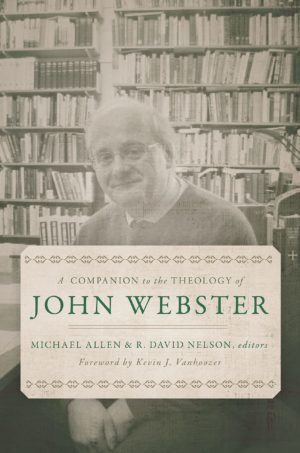
An overview and analysis of John Webster’s seminal contributions to Christian theology
At the time of his death, John Webster was widely hailed as one of the leading Christian theologians in the world. Over the course of three decades, he produced groundbreaking studies on the theologies of Eberhard Jüngel and Karl Barth and, especially since the turn of the millennium, numerous books and essays on various themes in Christian dogmatics. He then intended to write an encyclopedic systematic theology—a project he was unable to complete.
No substitute is possible for that lost opus, but the contributors offer this volume as an homage to Webster and an aid to those who want to learn from him. A Companion to the Theology of John Webster begins...
This Reader charts John Webster's theology from its earliest development, guiding the reader through selective essays that represent his corpus. It is an excellent introduction to the breadth of his writings, which teaches students how to engage with his particular mode of theological argument.T&T Clark Reader in John Webster starts with a biographical, chronological and topical survey of Webster's theological development. It notes his shifting conversation partners and his abiding theological principles. The editor places the essays in context with short introductions, as well as editorial footnotes clarifying key terms, historical or exegetical arguments or polemical emphases. This is an essential introduction to Webster's work and his...
The Brazos Theological Commentary on the Bible encourages readers to explore how the vital roots of the ancient Christian tradition inform and shape faithfulness today. In this volume, prominent Reformed theologian Michael Allen offers a theological reading of Ephesians. As with other series volumes, this commentary is designed to serve the church, providing a rich resource for preachers, teachers, students, and study groups.
The Oxford Handbook of Reformed Theology looks back to past resources that have informed Reformed theology and surveys present conversations among those engaged in Reformed theology today. First, the volume offers accounts of the major historical contexts of reformed theology, the various relationships (ancient and modern) which it maintains and from which it derives. Recent research has shown the intricate ties between the patristic and medieval heritage of the church and the work of the reformed movement in the sixteenth century. The past century has also witnessed an explosion of reformed theology outside the Western world, prompting a need for attention not only to these global voices but also to the unique (and contingent) history of...
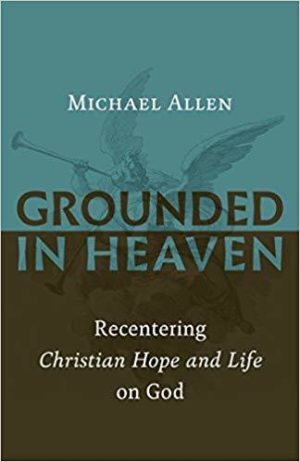
Eschatology and ethics are joined at the hip, says Michael Allen, and both need theocentric reorientation. In
Grounded in Heaven Allen retrieves the traditional concept of the beatific vision and seeks to bring Christ back into the heart of our theology and our lives on earth. Responding to the earthly-mindedness of much recent theology, Allen places his focus on God and the heavenly future while also appreciating ways in which the Reformed tradition provides a unique angle on broadly catholic concerns. Reaching back to classical ethics as well as its reformation by Calvin and other Reformed theologians,
Grounded in Heaven offers a distinctly Protestant account of the ascetical calling to be heavenly-minded and to deny one’s self.