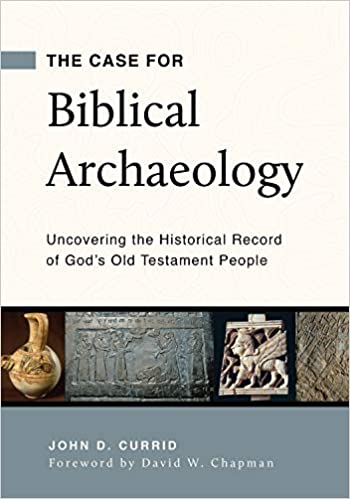
For many today, history holds little application to modern existence, and so many are biblically and historically uninformed. Archaeology―the systematic study of the material remains of human behavior in the past―provides a helpful corrective on these two fronts. The Bible can be understood without the use of outside sources and does not need to be proved. Yet archaeologist and professor John Currid shows how his field of study plays its part in restoring our understanding of ancient life and events. He gives background on the geography of the land of the Bible and a history of its excavation; describes archaeological sites throughout the land; and introduces discoveries connected to agriculture, architecture, ceramics, burial practices,...
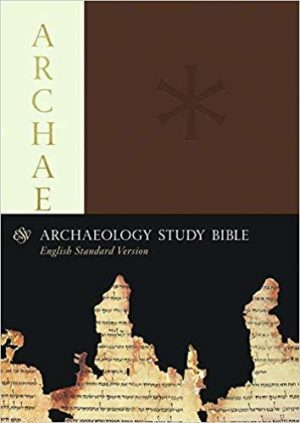
Created by a team of field-trained archaeologists, this highly illustrative Bible features brand-new notes and hundreds of helpful maps and photographs. 2,000+ study notes, 400+ full-color photographs, 200+ maps and diagrams, 15 articles, 4 timelines, and more. The ESV Archaeology Study Bible roots the biblical text in its historical and cultural context, offering readers a framework for better understanding the people, places, and events recorded in Scripture. With editorial oversight from Dr. John Currid (PhD, University of Chicago) and Dr. David Chapman (PhD, University of Cambridge), as well as contributions from a team of field-trained archaeologists, the ESV Archaeology Study Bible assembles a range of modern scholarship―pairing the...
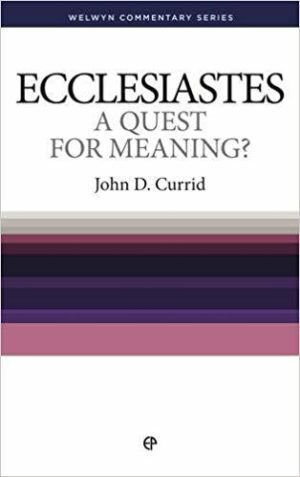
The latest addition to the Welwyn Commentary series has leading Old Testament scholar and series editor John D Currid bring a fresh approach to a book that seems to draw a lot of comment of the the wrong kind. In his Introduction he says: There is no book in the Old Testament that is as maligned and criticized as the book of Ecclesiastes. People point to the teachings of vanity, scepticism, and fatalism that they see so dominant in the writing. Why live, one asks, if the writer of Ecclesiastes is right that life is without meaning and purpose? . . . I would argue that the real reason that no book in the Old Testament is as disparaged as Ecclesiastes is simply because no book is so misunderstood. It is ironic, in my opinion, that no book in...
Genesis - the book of beginnings, the creation of the universe, the formation of mankind, the establishment of the covenant and the founding of the people of Israel. Many Christians regard the Old Testament as a source of interesting Sunday School stories that have little application for today, but the truth is that almost every Christian doctrine is found in seed form in Genesis. With skill and scholarship John Currid advocates the Mosaic authorship of Genesis and a literal six-day creation. He highlights the importance of the text for Christians and in doing so has produced a Christ-exalting study that will stand the test of time.
Why does God allow suffering? It’s a question that, in one form or another rears its head time and again. Whether it comes from someone who has just lost a loved one, been diagnosed with an incurable illness or even just surveyed the plight of the poor in the third world. A few days after the terrorist attacks of 9/11 the question that was being asked around the world was – Where was God in this? John Currid brings Biblical teaching to bear. God does work in suffering, he is not a worried observer unwilling or unable to intervene, rather he has a purpose at work and is in control.
Did the Old Testament writers borrow ideas from their pagan neighbors? And if they did, was it done uncritically? A respected Old Testament scholar and archaeologist engages with this controversial question by carefully comparing the biblical text to other ancient Near Eastern documents. Well-researched and thoughtfully nuanced, Currid aims to outline the precise relationship between the biblical worldview and that of Israel’s neighbors.
The book of Ruth has been called an ancient 'biblical Cinderella story' in which Ruth finds her prince: a rags-to-riches fairy tale. It is a wonderful short story. Many people throughout the ages have been touched by the sweetness and kindness so evident in the episode. Yet, as Peter Barnes observes, though the author does not push too much Boaz as a type of Christ, there is much of Christ in the commentary. John Currid looks at key themes within the book: the cost of obedience, the sovereignty of God, faithful living and redemption. The background is laid out - in the time of the Judges - as a time of degeneracy in the history of Israel. The focus then moves to one family within Israel, their move to Moab, the sadnesses there, the return...
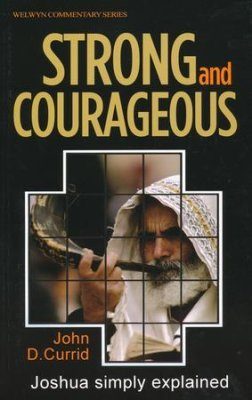
The central theme of the book of Joshua is that God keeps his promises. Over 500 years earlier, God had pledged to Abraham: 'To your offspring I will give this land' that is, the land of Canaan--and this promise had been repeated many times since then. Joshua records how the Israelites finally take possession of the land that God had promise to their fathers. The task facing them is an overwhelming one, but God has not left them to carry it out in their own strength. In the light of his presence with them and his provision for them, Joshua and the Israelites are repeatedly commanded to 'be strong and courageous'. Years later, Joshua passes on the same charge to the next generation, and testifies that not one word of God's promises has...