A Significant Need There is a shortage of candidates for ordained pastoral ministry, including pastors, missionaries, church planters, and missionaries. Consider the following from a handful of the churches that RTS serves: Ten percent of the Orthodox Presbyterian Church’s roughly 300 congregations are seeking pastors. Twenty-five congregations in the United Reformed Churches have vacant pulpits. The Evangelical Presbyterian Church, a denomination of 600 churches, has learned that half of its ministers plan to retire in the next five years. And the Presbyterian Church in America has estimated a need for 220 new ministers annually to meet existing needs and reach goals for church planting, foreign missions, and expansion of its Reformed...
David Hume (1711-1776) Through his pursuit of a naturalistic grounding for morality and his forceful critique of supernaturalism, Scottish philosopher David Hume significantly undermined confidence in orthodox Christianity. Professor, minister, and philosopher James Anderson summarizes the major points of Hume's thought and offers a critical assessment from a distinctively Reformed perspective. He shows that Hume's arguments, far from refuting the Christian worldview, indirectly support that worldview by exposing the self-defeating implications of naturalism. Deepen your understanding of this immensely influential thinker, and you will be better able to engage with today's secular challenges to faith.{{...
Some people boldly claim, "Christianity is fine for some, but it isn't for me". Others feel it is just outdated and irrelevant. For better or worse, everyone in the Western world has come into contact with Christianity: we all have some opinion on it. James Anderson, with a clear, humorous logic, explores what Christianity really claims, and shows the underlying reason and consistency behind these claims. By the end of
Why Should I Believe Christianity?, while you may not agree with the Christian worldview, it is impossible to be left sitting on the fence.
For expository preachers and teachers of the Bible, this is truly a gold mine. Present and past members of the Reformed Theological Seminary faculty have produced a volume that is...
Contrary to what many philosophers believe, Calvinism neither makes the problem of evil worse nor is it obviously refuted by the presence of evil and suffering in our world. Or so most of the authors in this book claim. While Calvinism has enjoyed a resurgence in recent years amongst theologians and laypersons, many philosophers have yet to follow suit. The reason seems fairly clear: Calvinism, many think, cannot handle the problem of evil with the same kind of plausibility as other more popular views of the nature of God and the nature of God's relationship with His creation. This book seeks to challenge that untested assumption. With clarity and rigor, this collection of essays seeks to fill a significant hole in the literature on the...
How do you view the world? It’s a big question. And how you answer is one of the most important things about you. Not sure what you’d say? Join James Anderson on an interactive journey of discovery aimed at helping you understand and evaluate the options when it comes to identifying your worldview. Cast in the mold of a classic “Choose Your Own Adventure” story, What’s Your Worldview? will guide you toward finding intellectually satisfying answers to life’s biggest questions―equipping you to think carefully about not only what you believe but why you believe it and how it impacts the rest of your life.
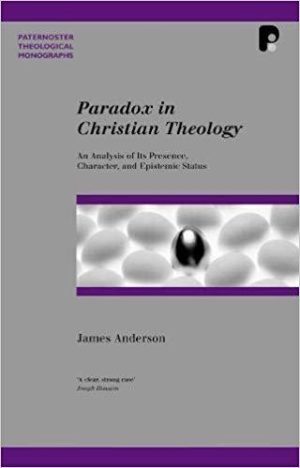
Does traditional Christianity involve paradoxical doctrines doctrines that present the appearance (at least) of logical inconsistency? what is the nature of these paradoxes and why do they arise? What is the relationship between "paradox" and "mystery" in theological theorizing? And what are the implications for the rationality, or otherwise, of orthodox Christian beliefs? In Paradox in Christian Theology, James Anderson argues that the doctrines of the Trinity and the incarnation, as derived from Scripture and formulated in the ecumenical creeds, are indeed paradoxical. But this conclusion, he contends, need not imply that Christians who believe these doctrines are irrational in doing so. In support of this claim, Anderson develops and...