<img height="1" width="1" style="display:none" src="https://www.facebook.com/tr?id=1900972313295922&amp;ev=PageView&amp;noscript=1">
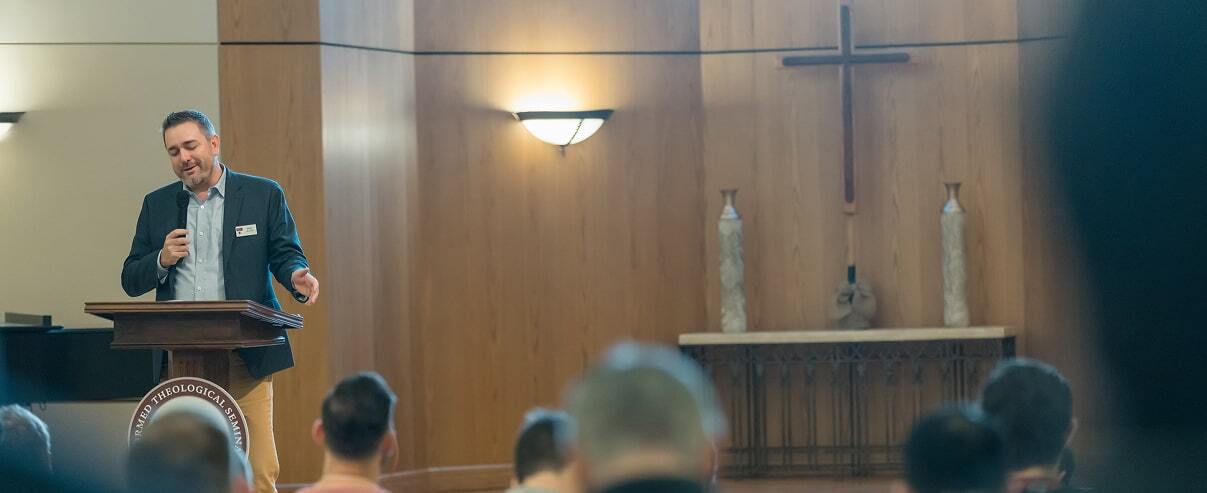
Speaker presenting during a practical ministry session in the Orlando chapel.
Reformed Theological Seminary

RTS Orlando Practical Experience

Ministry Experience

At RTS Orlando, students engage in meaningful ministry while pursuing theological education. The Hybrid MDiv program is designed for those already serving in churches or ministries, allowing them to stay in their current context and apply what they’re learning immediately. This model strengthens both biblical understanding and pastoral effectiveness through real-time, real-world experience.
RTS Orlando campus sign on a brick wall.
On-Campus Intensives

Students in the Hybrid MDiv complete up to 70 credits online and the remaining 36 through in-person courses on the Orlando campus. These residential classes are delivered in hybrid or intensive formats, typically during seven one-week campus visits. These weeks offer more than just academics—they foster deep relationships, hands-on learning, and continuity with RTS’s world-class faculty and rigorous curriculum. Students benefit from the same practical field education as residential students while building lasting ministry connections across each cohort.
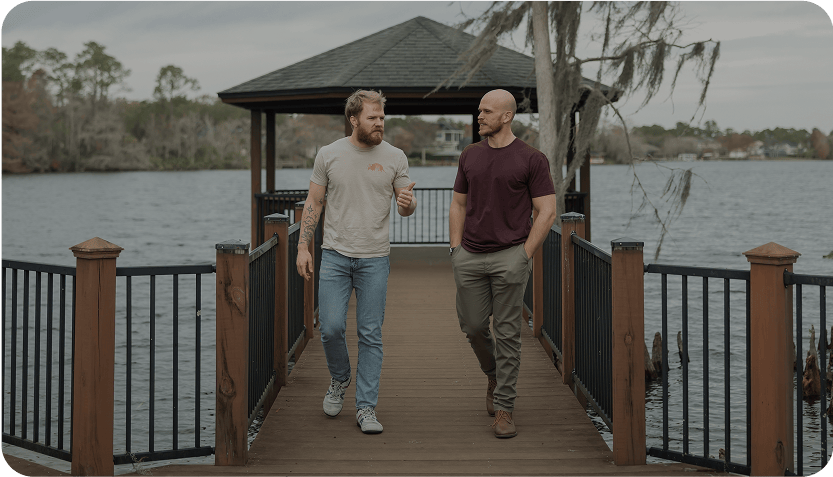
 
Two men walking and talking on a campus dock.
Field Education Requirements

In addition to on-campus intensives, MDiv students complete two field education internships—typically one semester each with 8–10 hours per week of ministry. Guided by a mentor, each internship is structured around a Learning Contract that outlines goals and responsibilities and is approved by the Director of Field Education, who also oversees final evaluations.


Frequently Asked Questions

What is the Hybrid MDiv program?

The Hybrid Master of Divinity (MDiv) program at RTS Orlando is designed for students who are unable to relocate for seminary. It combines online coursework with on-campus intensives, allowing students to stay rooted in their current ministry or job while earning a fully accredited MDiv. The program maintains the same high academic and spiritual standards as RTS’s traditional residential degree.

What are the benefits of this model?
  • Flexibility: Complete coursework while remaining active in your current ministry, job, or location.

  • Quality: Enjoy the same curriculum, faculty, and field education as residential students.

  • Community: Develop a close-knit network through cohort-based learning and on-campus sessions.

  • Practical Application: Apply what you’re learning immediately in your own ministry context.

How long does it take to complete the program?

Most students complete the Hybrid MDiv in five years, which comfortably fits the schedule of those working full-time. However, the program offers flexibility, allowing students to finish in as few as three years or take up to seven years, depending on their pace.

What is the schedule like each year?

Each year typically includes:

  • Summer: Hybrid course with online learning beginning in June and on-campus meeting in July

  • Fall: Distance education courses (fully online)

  • Winter: Hybrid course with online learning starting in December and on-campus meeting in January

  • Spring: Distance education courses (fully online)

Do students receive hands-on ministry experience?

Yes. Because most students remain in their local church or ministry setting while completing the program, they have ongoing opportunities to apply what they’re learning in real time. The program also includes practical field education requirements, ensuring students gain meaningful pastoral experience throughout their studies.

Will I still build relationships if I’m mostly online?

Absolutely. Students regularly form deep bonds during the on-campus intensive weeks, which carry over into online classes. Many graduates cite the friendships and shared learning experiences as one of the most rewarding parts of the program.

What are the Field Education requirements?

RTS Orlando’s MDiv students are required to complete two supervised internships during their program. Each internship must last at least one semester and involve 8–10 hours per week of hands-on ministry.

Students must work with a mentor and the Director of Field Education to create a Learning Contract that defines their goals and responsibilities. Mentors provide ongoing feedback, and formal evaluations are submitted at the end of each internship.